
Top Kitchen Design Mistakes Homeowners Make
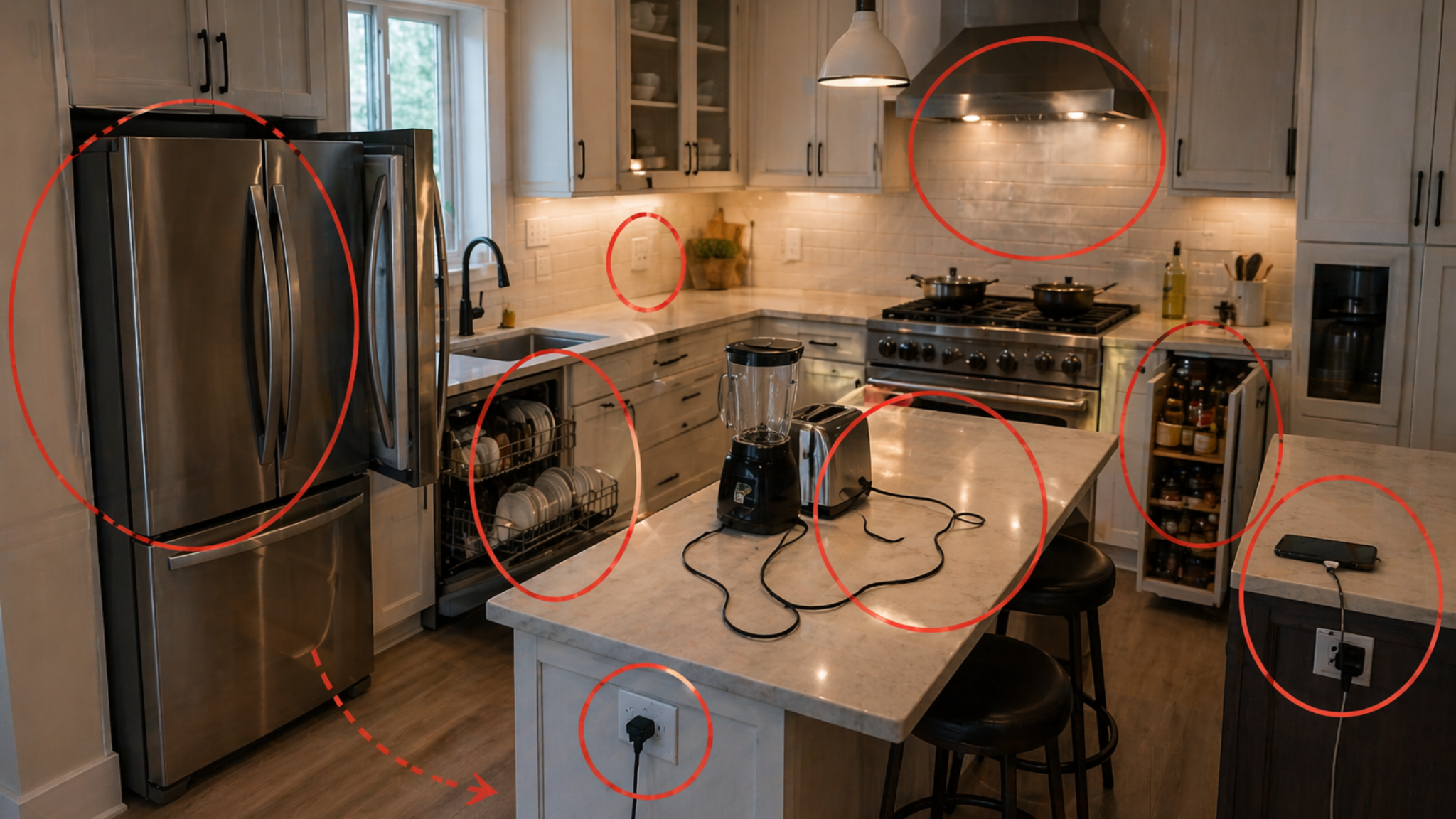
Table of Contents
Ignoring Workflow and "Traffic Jams"
Choosing Beauty Over Durability
Poor Lighting Layers
Wasted Storage Space
Inadequate Ventilation and Power
Forgetting the Small Details
Conclusion
Frequently Asked Questions
- Kitchen remodel ROI can be high—but only when functionality is prioritized over looks.
- Poor layout and workflow planning can create daily inconvenience and reduce efficiency.
- Choosing style over durability leads to high maintenance and faster wear.
- Proper lighting layers (task, ambient, accent) are essential for a usable kitchen.
- Smart storage solutions eliminate clutter and make everyday use easier.
- Small details like ventilation, outlets, and spacing have a big impact on overall performance.
The most common kitchen design mistakes come down to poor layout planning, inadequate lighting, and prioritizing aesthetics over durability and function. Kitchen design is a significant investment that can increase the value of your house when done right.
According to Zillow, one of America's most used online real estate marketplaces,57% of buyers said that having a kitchen of their preferred style was very important for them.
A minor kitchen remodel in California gives an ROI of awhopping 129%. An average kitchen remodel costs $29,728 and returns an average of $38,384.
However, the luxury kitchen design ideas you see online often prioritize photography over practicality. Your kitchen remodel project should be driven by practical necessity. It can be the modernization of your kitchen, a change in lifestyle, an improvement in structural integrity and safety, or putting your home up for sale. And that return on investment shows an upward trend only when you make no mistakes.
This article shares some common kitchen remodel mistakes that can compromise your investment, disrupt your kitchen’s flow, and turn a high-value project into a costly frustration.
Mistake 1: Ignoring Workflow and "Traffic Jams"
If you place the refrigerator or the pull-out trash bin in a tight corner or at a main entrance point, opening them can act as a physical barrier. Similarly, placing a dishwasher directly opposite the oven can make it impossible to have both doors open at once for cleaning.
Solution: Plan for Work Zones
Create functional work zones as shown in the table below:
| Zone | Primary Focus | Best Placement |
|---|---|---|
| Cooking Zone |
|
Centralized to allow quick access to pots, pans, and spices |
| Cleaning Zone |
|
Away from the main entrance to keep dirty dishes out of the line of sight |
| Social Zone |
|
On the outer edge of the kitchen so guests and kids stay clear of the cook |
Oversized kitchen islands are one of the most common causes of poor workflow. Your walkways should be at least 42 inches.
Mistake 2: Choosing Beauty Over Durability
While white Carrara or Calacatta marble is the gold standard for luxury, marble is a porous, soft stone that can be permanently stained or etched (dull spots) by a spilled glass of red wine or a drop of lemon juice within minutes. Similarly, high-gloss cabinetry might look sleek in a showroom but may not be practical in your kitchen. The shiny surface shows every fingerprint, smudge, and scratch the moment the sun hits it. This makes even a clean kitchen look dirty.
Solution: Design for Reality
Opt for engineered quartz or quartzite if you have children or pets. These materials offer the look of natural stone but are significantly harder and more resistant to stains and heat.
If you are a family of frequent entertainers, then you should choose non-porous surfaces and durable flooring like large-format porcelain tile or high-quality engineered hardwood. These materials are designed to handle heavy foot traffic and the occasional dropped glass without chipping or staining.
Mistake 3: Poor Lighting Layers
Many homeowners install a uniform grid of bright ceiling lights, assuming that the space will be well-lit. When you stand at the counter to prepare food, your head and shoulders block the light from above, casting a dark shadow directly over your workspace.
Solution: The Three-Layer Approach
| Lighting Type | Placement | Purpose |
|---|---|---|
| Task | Under-cabinet | Eliminates shadows on prep surfaces |
| Ambient | Ceiling | General light; dimmable for mood |
| Accent | Island | Adds style and "luxury" feel |
Use three distinct layers as shown in the table below:
Mistake 4: Wasted Storage Space
Standard lower cabinets usually come with deep, fixed shelves. To find a specific pot or lid, you are forced to get on your hands and knees and dig through the dark. It is so difficult to reach the back of deep shelves that items get pushed behind one another and forgotten. Eventually, those back corners just become wasted space filled with clutter you never use.
Solution: All-Drawer Lower Cabinets
Replace lower shelves with deep, heavy-duty drawers. You don’t have to bend as the drawer brings the contents out into the light. You can easily organize the contents, and these cabinets are also easy to clean.
Also, create dedicated spots to hide the toaster and coffee maker so the counters stay clean.
Mistake 5: Inadequate Ventilation
Many homeowners pick a range hood based solely on its design. If the motor is too weak, then you will have to keep it running to remove smoke, steam, and grease. Cooking smells will linger if you have an open-concept home.
Solution: CFM Rating
Choose a range hood with the correct CFM (airflow) rating for your stove’s heat output. The motor should be powerful enough to clear the air in a low, quiet setting so you can still hold a conversation while cooking.
Mistake 6: The Island Outlet Problem
Many homeowners forget to include enough power outlets in their large, beautiful island. You will have to use long, dangerous extension cords across the walkway to use a blender or mixer. The island becomes a dead zone where you cannot even charge your phone.
Solution: "Pop-up" Outlets
Use pop-up outlets or outlets tucked into the side of the island, allowing you to easily power small appliances and digital devices.
Small Details That Make a Big Difference
The following details may seem small, but they dictate how smoothly your kitchen actually functions:
Install pull-out cabinets for trash and recycling bins.
Use long handles on heavy drawers for a better grip.
Leave 15 inches of open counter space next to the oven and fridge.
Add a slim rack next to the stove for oils and spices.
Use soft-close hinges to prevent doors and drawers from slamming.
Conclusion
Avoid these common mistakes to make your kitchen as functional as it is beautiful. Protect your investment with smart layout, durable materials, and thoughtful details. Hire professionals to create a space that works for your lifestyle.
Kellow Construction is a trusted name for kitchen remodeling—from traditional to modern and beyond!
Schedule a consultation now!
Frequently Asked Questions
Can I fit an island in my kitchen, or will it make the space feel cramped?
An island fits well if you can maintain walkways of at least 42 inches wide. If the island forces these paths to be narrower, it will likely disrupt your kitchen's flow and feel cramped.
What makes a kitchen look cheap?
Visible smudges on high-gloss cabinetry and stained or etched marble surfaces can quickly make a high-end kitchen look unkempt.
Is it worth spending more on quartz countertops compared to granite?
Yes, quartz is often worth the investment because it is non-porous and harder than many natural stones, making it highly resistant to stains and heat. It provides a luxury look without the high maintenance and fragility of materials like marble.
How do I stop my kitchen from running out of storage even after adding cabinets?
Switch from standard lower shelves to deep, heavy-duty drawers to eliminate wasted space in dark corners. You should also incorporate dedicated spots for small appliances to keep your countertops clear and organized.
Where should I place appliances like the fridge and oven for the most practical layout?
Place the fridge on the outer edge of the kitchen to keep guests out of the cooking path, and ensure the oven and dishwasher are not placed directly opposite each other. Group appliances into functional zones—Cooking, Cleaning, and Social.
How do I choose cabinet colors that won’t go out of style in a few years?
Avoid trendy, high-gloss finishes that highlight every scratch and smudge, making the kitchen look dated and dirty. Instead, stick to classic, durable finishes that prioritize a clean look.