How to Choose the Right Kitchen Layout for Your Home?
Key Takeaways
- Choosing the right kitchen layout is essential for creating a functional and comfortable cooking space.
- Popular layouts include single-wall, galley, L-shaped, U-shaped, island, peninsula, and G-shaped kitchens.
- The best layout depends on factors such as your kitchen size, cooking habits, storage needs, and renovation budget.
- Efficient layouts improve workflow, organization, and overall usability of the kitchen.
- Careful planning and smart design decisions can make your kitchen remodel more successful and enjoyable.
If you’re planning a kitchen remodel, you’ve probably already started wondering things like: Which kitchen layout will actually work best for my space? How can I make my kitchen more functional? Or how do I pick something that looks great but also works for everyday cooking?
These questions are completely normal. When people start remodelling their kitchen, they often focus on cabinets, colors, or appliances first. But in reality, one of the most important decisions is choosing a good kitchen layout.
The layout decides how easily you can move around the kitchen, how comfortable cooking feels, and how organized everything stays. A well-planned layout can make even a small kitchen feel efficient and enjoyable to use.
In this blog, we’ll explore some of the top kitchen layouts, along with their pros, cons, and ideal uses, so you can choose the one that best fits your space and lifestyle.
Which Kitchen Layouts Are Most Popular for Your Remodel?
When planning a kitchen remodel, choosing the right layout is one of the most important decisions you’ll make. Different kitchen layout styles work better depending on the size of your home, your cooking habits, and how you use the space every day.
Below are some of the most popular layouts homeowners choose, along with where they work best and what to consider before selecting one.
1. Single-Wall Kitchen
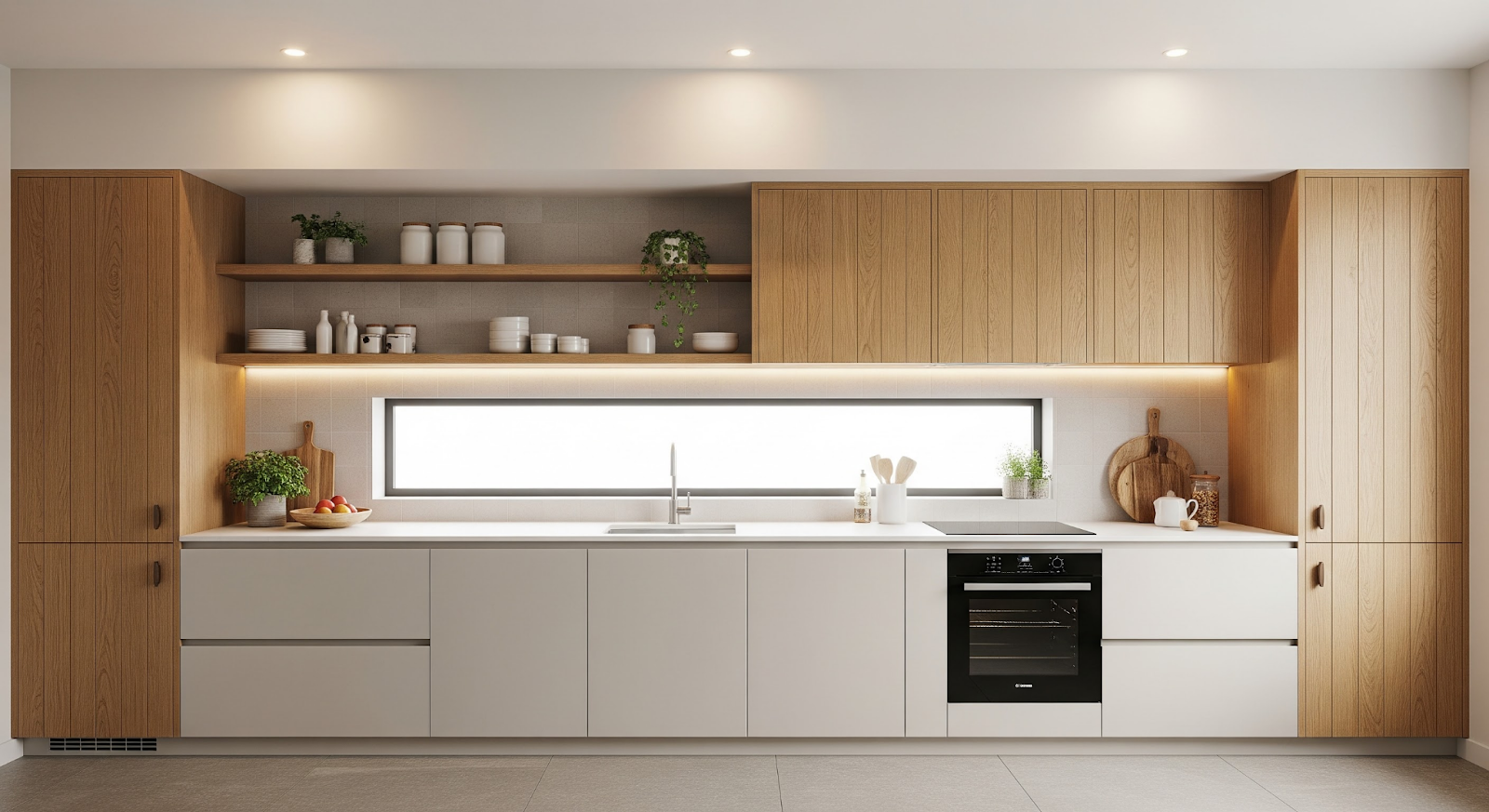
A single-wall kitchen keeps all cabinets, appliances, and countertops along one wall. This simple design is commonly used in small homes, studio apartments, or open-concept living spaces where saving floor space is important.
Because everything sits in a straight line, the layout is easy to plan and often more budget-friendly. However, it may offer limited counter space and storage compared to larger kitchen designs.
Best for: Studio apartments, compact homes, or minimalist kitchen spaces.
2. Galley Kitchen
A galley kitchen features two parallel rows of cabinets and appliances, with a walkway between them. This layout is known for its efficiency because everything is positioned within easy reach, helping create a smooth cooking workflow.
While it works well in smaller homes, the narrow design can feel slightly tight if multiple people are using the kitchen at the same time.
Best for: Narrow kitchens, small apartments, and homes where efficient cooking space is a priority.
3. L-Shaped Kitchen
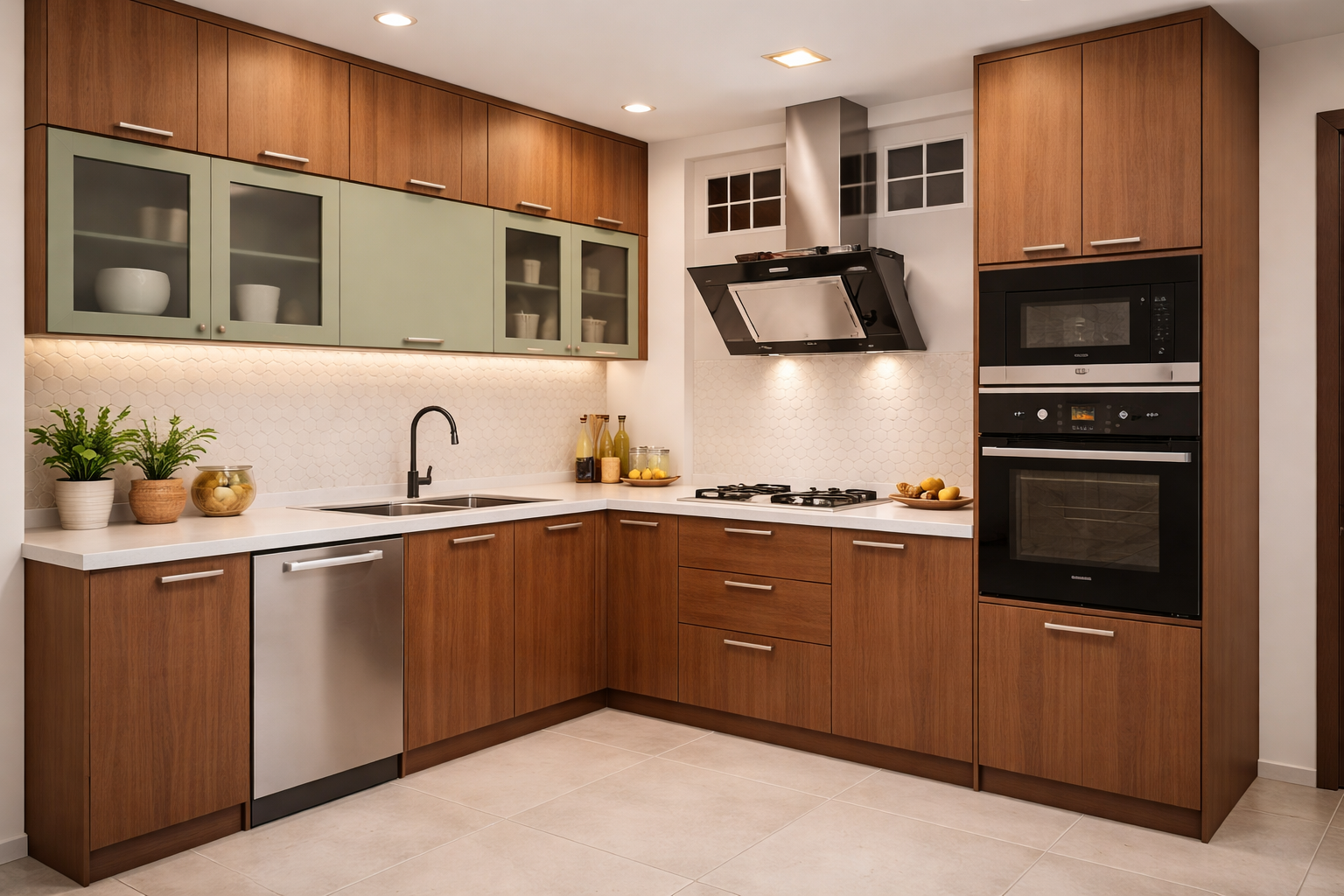
An L-shaped kitchen places cabinets and appliances along two connected walls, forming an “L.” This layout helps open up the room and creates a comfortable flow between the kitchen and nearby living or dining areas.
It’s one of the most versatile kitchen cabinet layouts and works well for homeowners who want a balance between functionality and an open feel.
Best for: Medium-sized kitchens and open-concept floor plans.
4. U-Shaped Kitchen
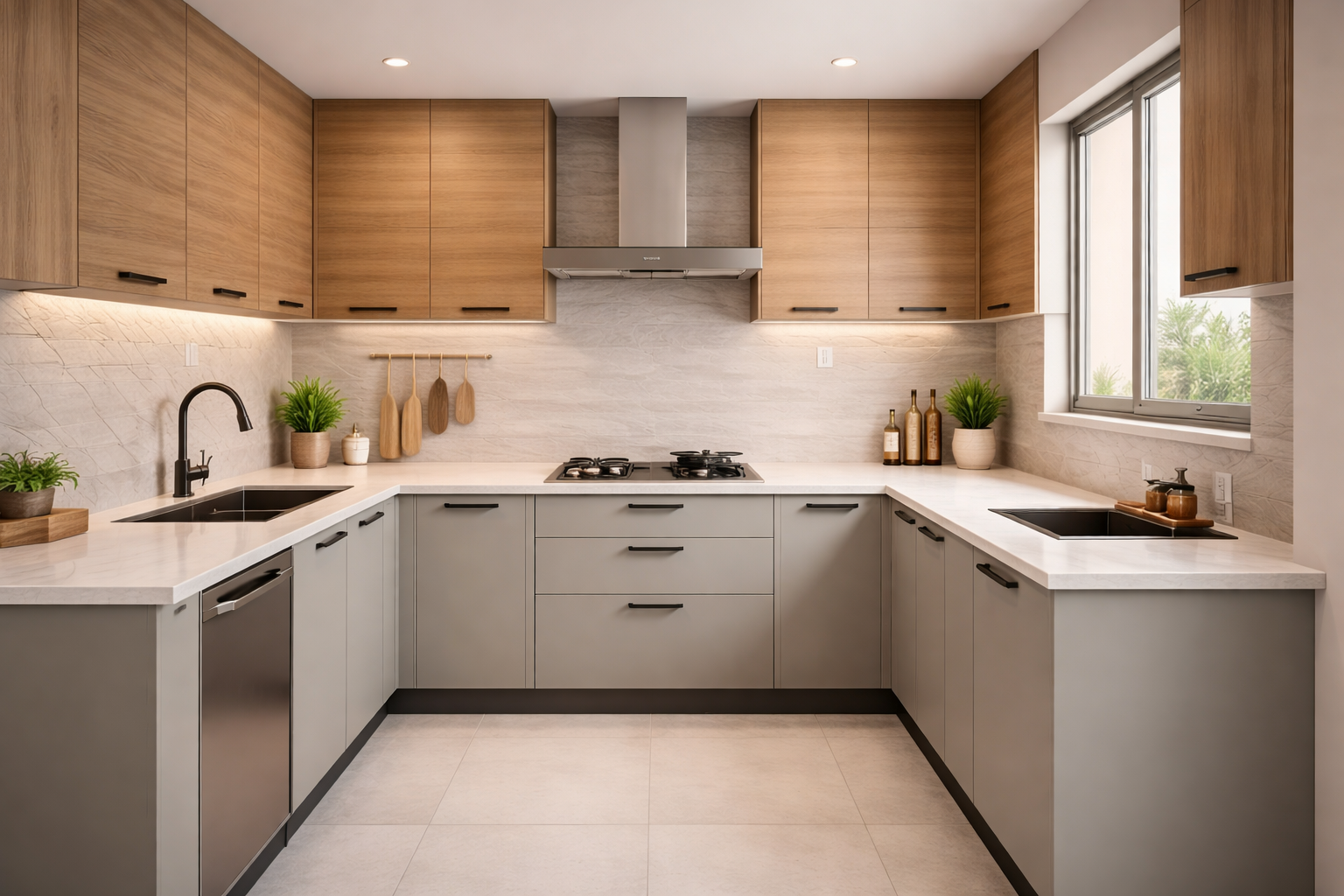
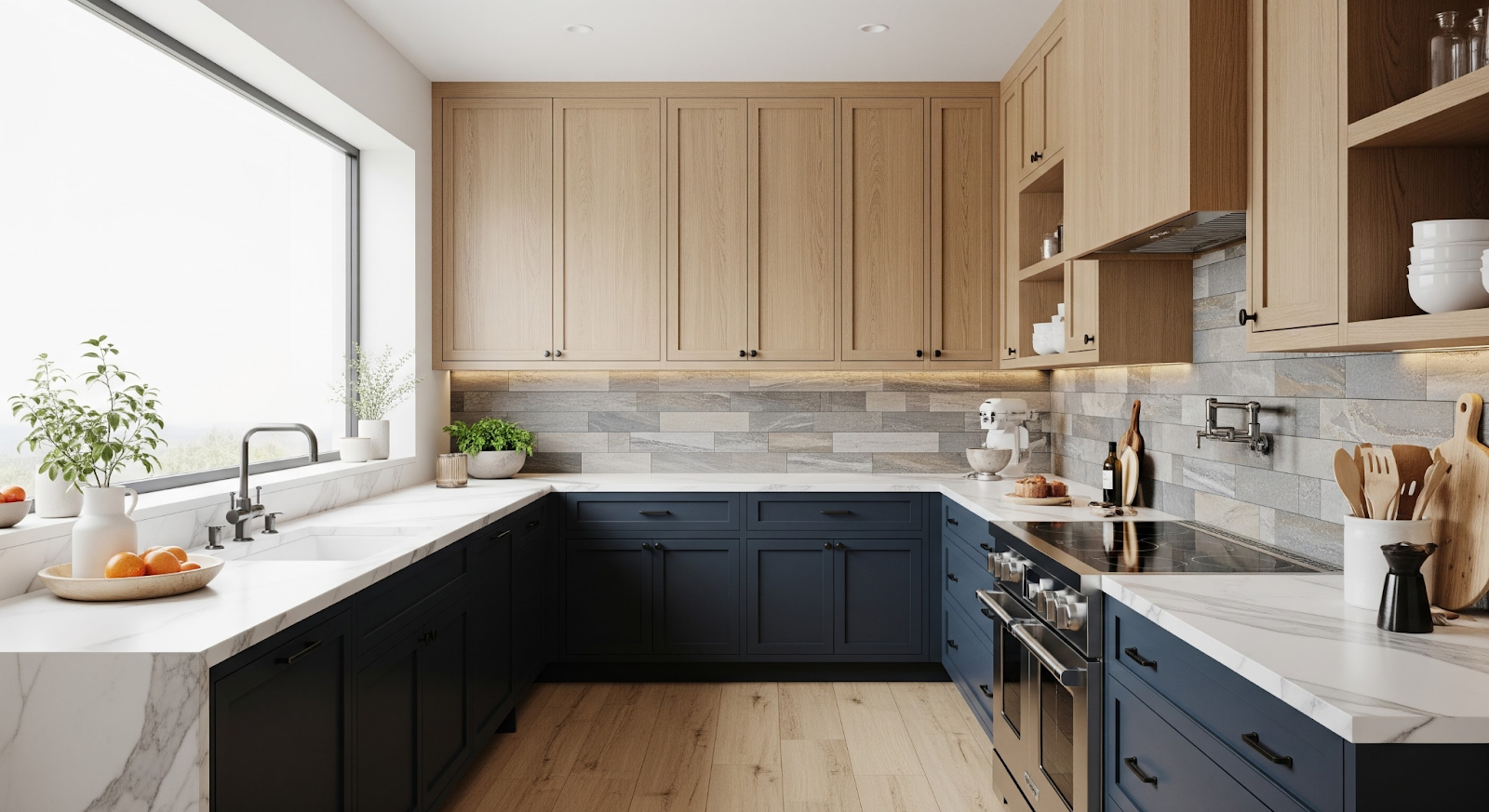
A U-shaped kitchen surrounds the cook with cabinets and counters on three sides, creating a highly functional workspace. This layout provides plenty of room for food preparation, cooking, and storage.
Because of its structure, it allows multiple cooking zones and can accommodate more than one person working in the kitchen.
Best for:Larger kitchens and households where cooking happens frequently.
5. Island Kitchen
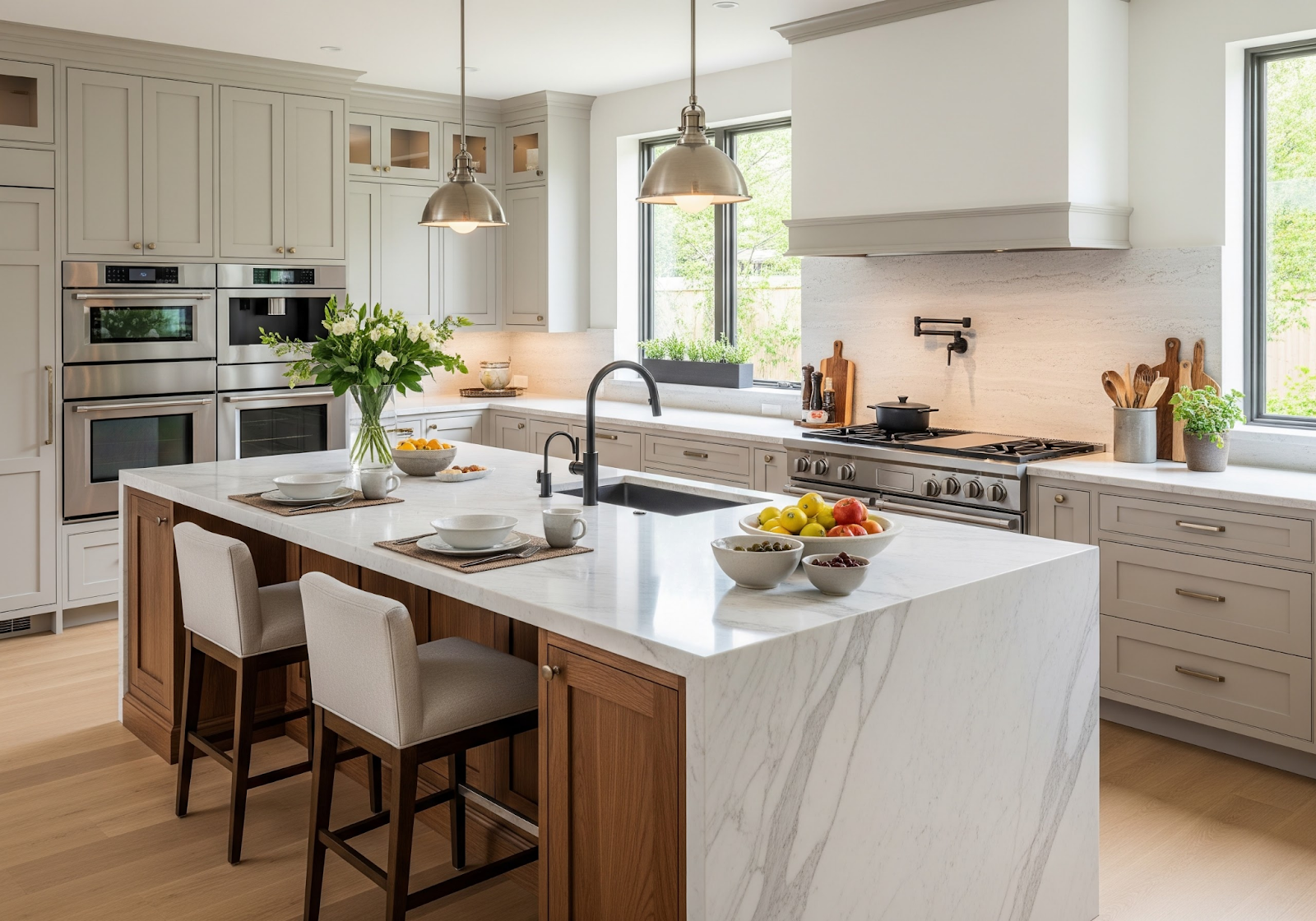
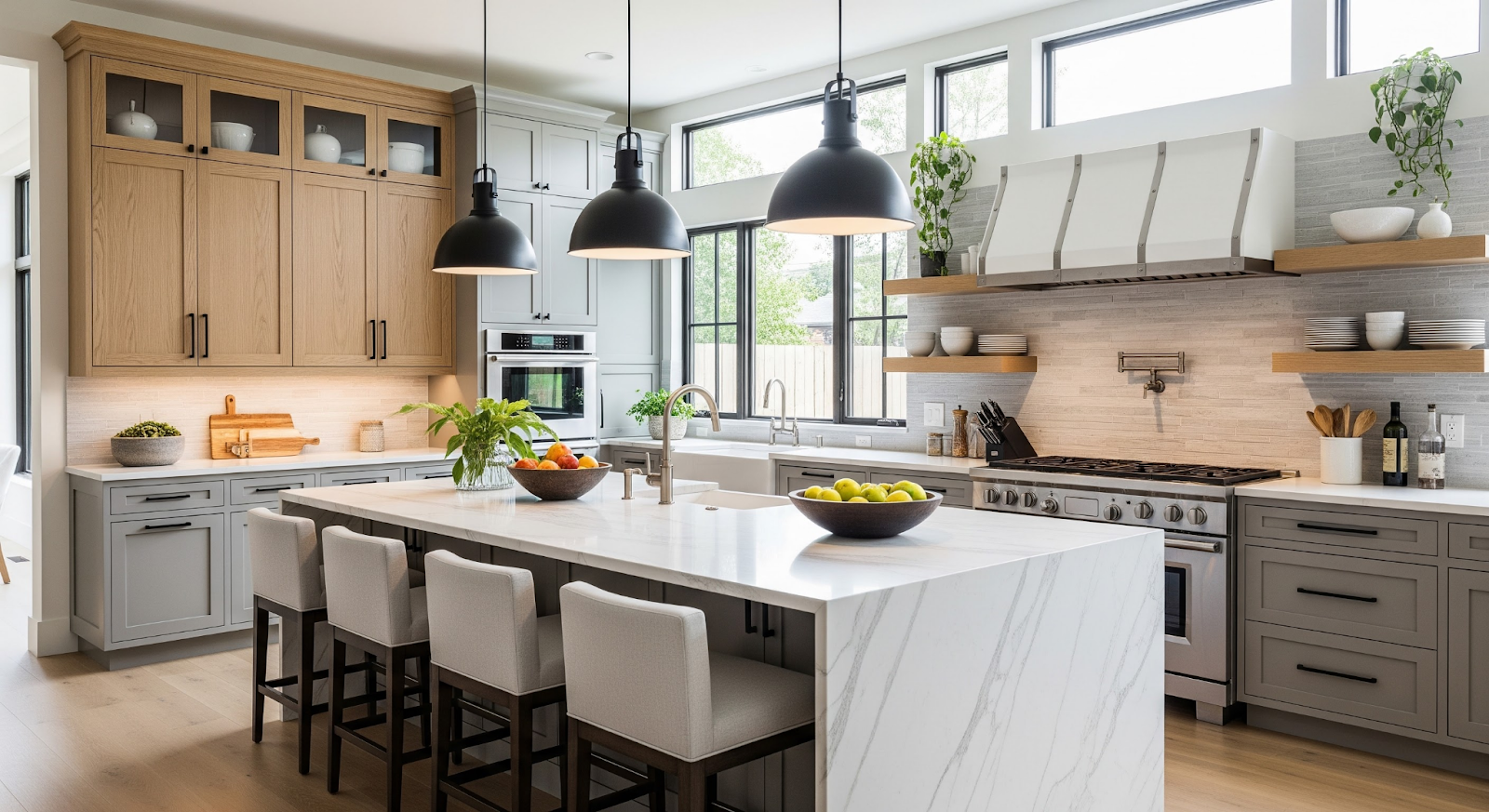
An island kitchen includes a central island placed within an L-shaped or U-shaped layout. The island can serve as additional prep space, storage, seating, or even a casual dining area.
It also turns the kitchen into a more social space where family members or guests can gather while meals are being prepared.
Best for:Open-concept kitchens and homes designed for entertaining.
6. Peninsula Kitchen
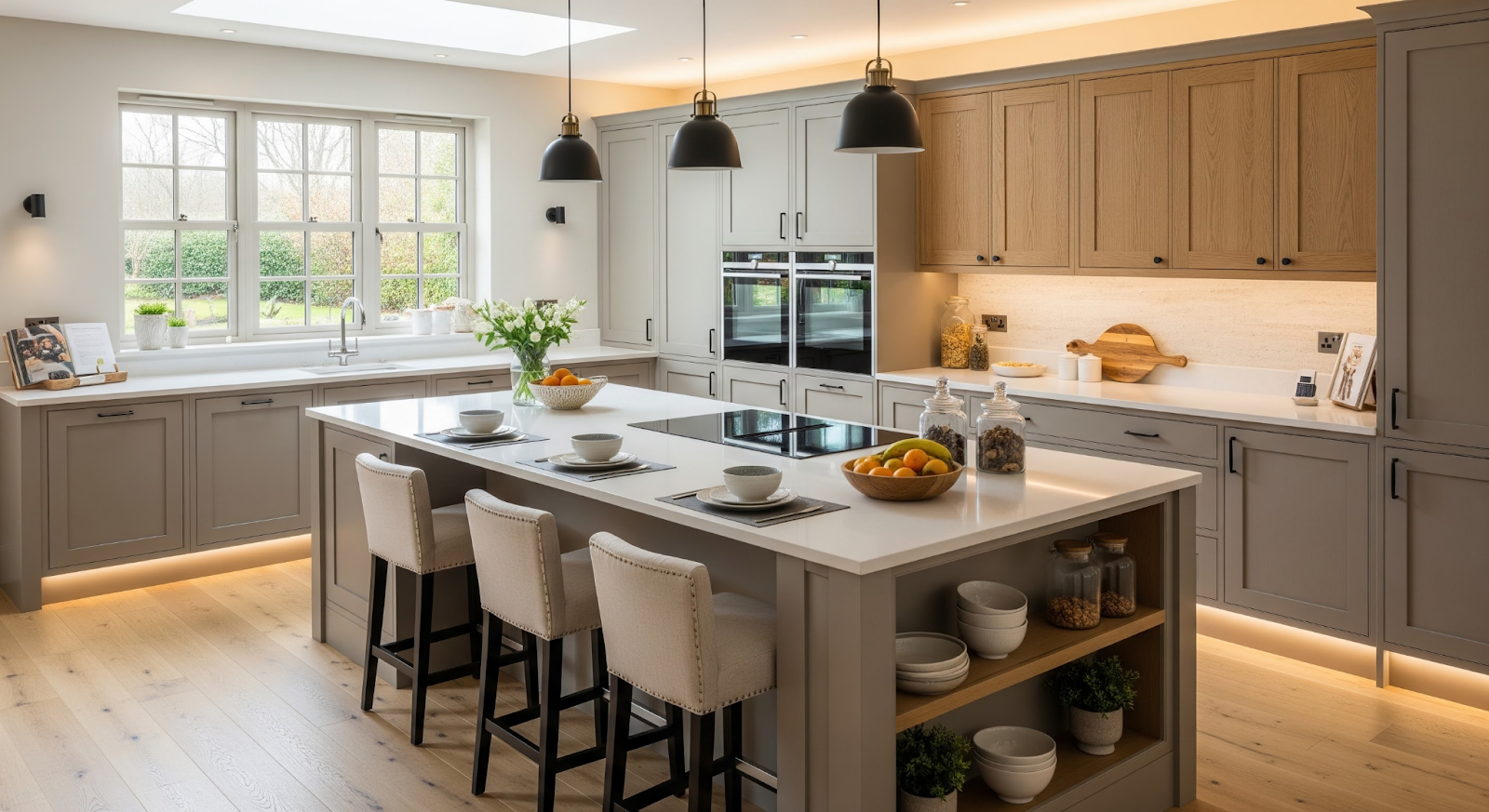
A peninsula kitchen works similarly to an island layout, but instead of standing alone, the extra counter space is connected to the main countertop. This creates additional workspace while keeping the layout more compact.
It’s a practical solution for homes that want the benefits of an island but don’t have enough room for a separate one.
Best for:Medium-sized kitchens and semi-open layouts.
7. G-Shaped Kitchen
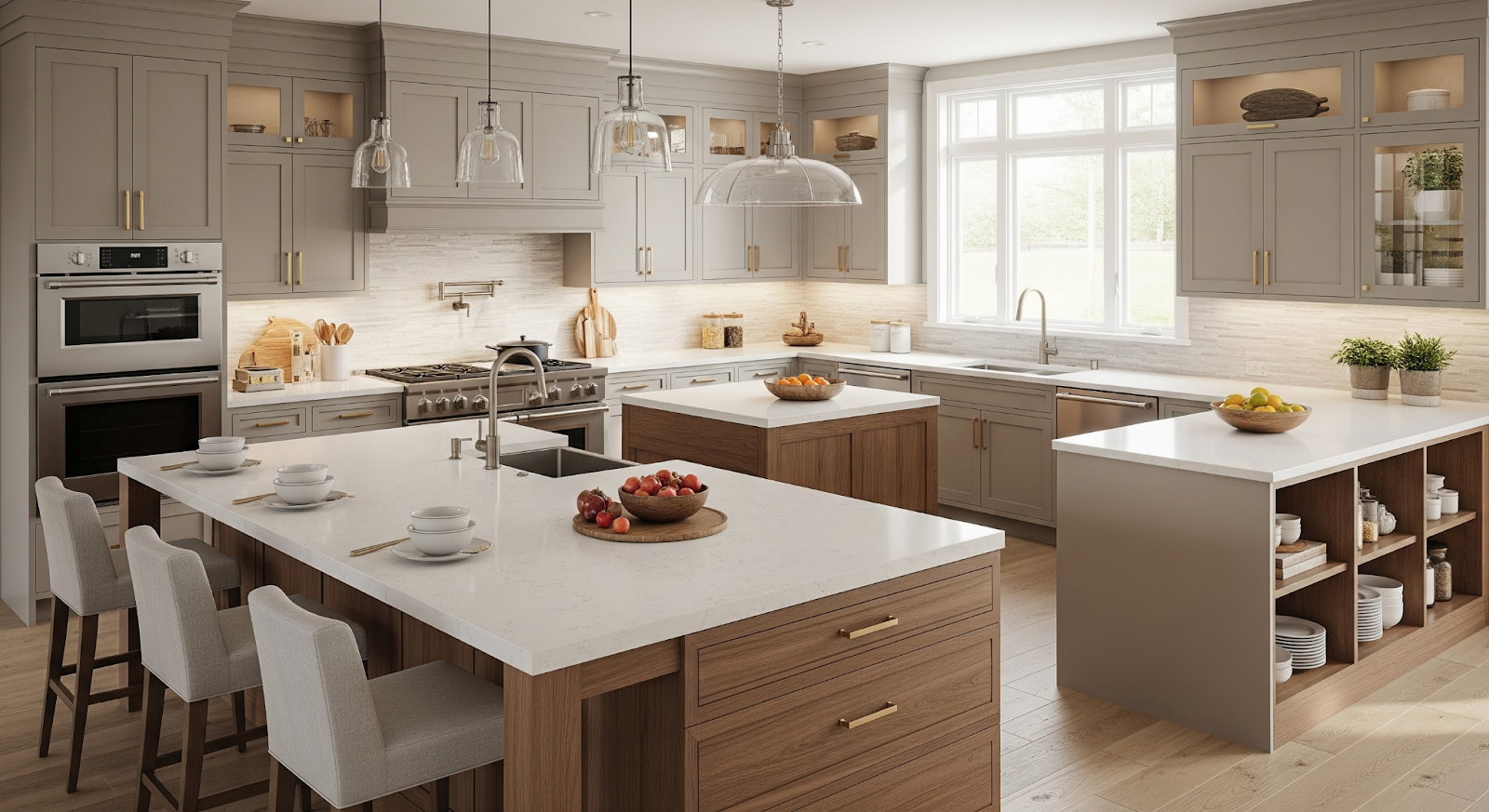
A G-shaped kitchen expands on the U-shaped design by adding an extra counter or peninsula, forming a “G” shape. This layout offers maximum counter space and storage, making it ideal for homeowners who cook often.
However, because of its size and cabinetry requirements, it usually works best in larger kitchens.
Best for:Large homes, serious home cooks, and families that use the kitchen frequently.
What Factors Should You Consider When Choosing a Kitchen Layout?
Choosing the optimal kitchen layout isn’t just about what looks good. It should also match how you use your kitchen every day.
Here are a few important things to consider:
The size and shape of your kitchen
Your family’s cooking habits and lifestyle
Your renovation budget
Storage needs and appliance placement
How open you want the kitchen to feel with nearby living or dining areas
When these factors are considered together, it becomes much easier to choose the right layout.
Thinking about remodelling more than just your kitchen?If you're planning to upgrade other areas of your home as well, you may also find our guide on how to remodel a home on a budget helpful for smart ideas that allow you to renovate efficiently without overspending.
What are Some Useful Tips for a Successful Kitchen Remodel?
A kitchen remodel is a big project, so planning carefully can make a huge difference.
Here are a few helpful tips:
Work with a professional kitchen designer
Focus on functionality first, then aesthetics
Plan lighting and ventilation early
Think about storage solutions like pull-out drawers, tall cabinets, or a pantry
Good planning ensures your kitchen looks beautiful and works well for everyday use. If you're still preparing for your renovation project, you may also find it helpful to review our guide on what to consider when planning a kitchen renovation for additional planning tips.
Conclusion
Choosing the right kitchen layout is essential for creating a space that is both functional and comfortable. From single-wall and galley kitchens to L-shaped, U-shaped, island, peninsula, and G-shaped designs, each layout offers unique benefits depending on your home’s size and lifestyle.
By carefully considering your cooking habits, storage needs, and available space, you can select the optimal kitchen layout to improve workflow and enhance daily use. A well-designed kitchen not only looks great but also makes cooking and gathering more enjoyable.
At Kellow Construction, we specialise in creating beautiful, functional kitchens tailored to your home. Visitour site to learn more about our kitchen remodeling services.
FAQs
1. What is the most efficient kitchen layout?
The galley kitchen layout is often considered the most efficient because appliances, cabinets, and countertops are placed on two parallel walls. This setup keeps everything within easy reach and creates a smooth workflow for cooking and food preparation.
2. What is the most popular kitchen layout?
The L-shaped kitchen layout is one of the most popular designs among homeowners. It opens up the space and creates a natural flow between the kitchen and nearby living or dining areas, making it ideal for modern homes.
3. Which kitchen layout works best for small kitchens?
For smaller kitchens, single-wall and galley layouts are usually the best choices. These designs save space while still providing easy access to appliances, storage, and work areas.
4. Is a kitchen island better than a peninsula?
A kitchen island works best in larger kitchens because it provides additional workspace, storage, and seating. A peninsula, on the other hand, connects to the main countertop and works well in kitchens that don’t have enough space for a separate island.
5. How do I choose the right kitchen layout for my home?
To choose the right kitchen layout, consider the size of your kitchen, your cooking habits, storage needs, and how open you want the space to feel. A well-planned layout improves workflow and makes everyday cooking more comfortable and efficient.