Is Your Contractor Trustworthy? 7 Signs To Look For

Key Takeaways
- A trustworthy contractor always carries valid licensing and insurance.
- Get at least 3 written bids before making your decision.
- A detailed written contract protects you from hidden costs and disputes.
- In California, contractors cannot legally ask for more than 10% or $1,000 upfront.
- Red flags like pressure tactics and vague estimates are early warning signs.
- You can verify any contractor license for free at cslb.ca.gov .
Hiring a contractor is one of the most important decisions you will make for your home.
Get it right, and your renovation goes smoothly. Get it wrong, and you could lose thousands of dollars, deal with months of delays, or end up with work that fails inspection.
The good news is that finding a trustworthy contractor is not complicated. You just need to know what to look for and what questions to ask.
According to recent reports from the Consumer Federation of America, thousands of homeowner complaints are filed every year due to unlicensed or uninsured contractors. Most of those situations could have been avoided with a few simple checks done up front.
That’s exactly what this guide will help you do. From verifying licenses to checking references, we’ll guide you step by step. We’ll also help you spot red flags and ask the right questions.
By the end of this blog, you’ll know exactly what to look for, what to avoid, and how to hire a professional you can truly trust.
What Can Go Wrong When You Hire the Wrong Contractor
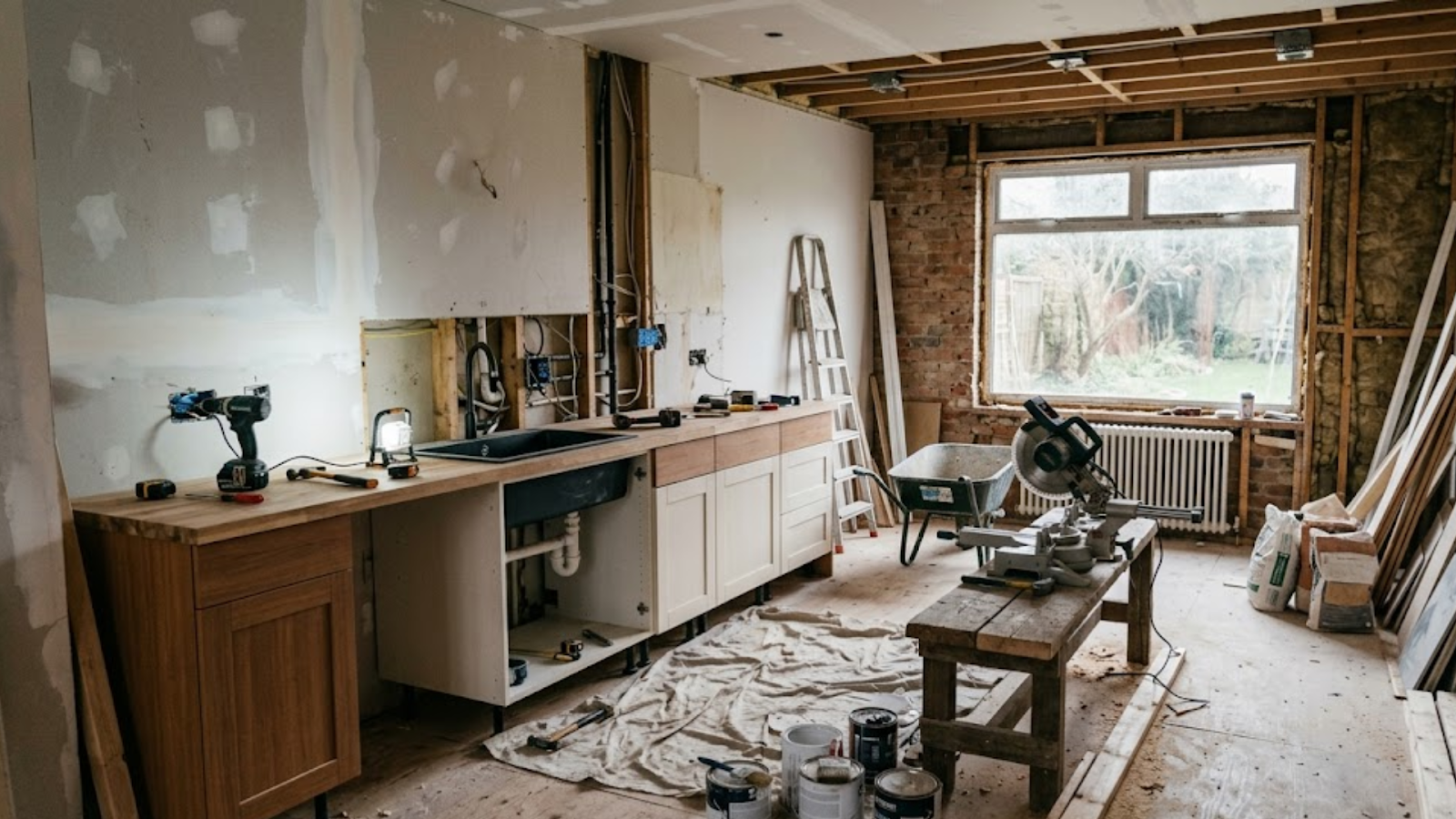
Hiring a contractor is not like buying a product you can return. Once work starts, you are deeply committed. A bad hire can mean unfinished projects, costs that spiral out of control, or work that fails inspection and has to be redone from scratch.
Skipping the right checks can lead to much bigger problems down the road. Here is what can go wrong when you rush this decision.
| What You Skip | What Can Go Wrong |
|---|---|
| Verifying the license | Substandard work with no legal recourse |
| Checking insurance | You pay out of pocket if a worker is injured on your property |
| Getting a written contract | Scope creep, surprise costs, and hard-to-resolve disputes |
| Checking references and reviews | No way to predict quality or reliability before work starts |
| Confirming the permit process | Unpermitted work can block your home sale and require expensive tear-outs |
These are not rare situations. They happen every day. The good news is that they are almost entirely avoidable when you know what to check up front. Working with a licensed and insured contractor takes most of these risks off the table entirely.
7 Signs You Are Hiring A Trustworthy Contractor

Before you say yes to a contractor, take a moment to look for these signs. These are the qualities that separate a reliable professional from someone who will cause you headaches.
1. They Have a Solid and Verifiable Reputation
Five-star ratings look great, but they do not tell the whole story. Read the actual reviews. Look for patterns. Are past clients saying the contractor communicated well? Did they finish on time? Did they stick to the quoted price?
Ask for 2 to 3 references from projects similar to yours. Actually call them. A trustworthy contractor will have no problem with this.
Check their profiles on Google, Houzz, and the Better Business Bureau. Look at how they respond to negative reviews. That tells you a lot about how they handle problems.
2. They Carry Valid Licensing and Insurance
This is the most basic check, and it is non-negotiable.
Ask the contractor for proof of their general liability insurance and workers' compensation coverage. Both matter. General liability covers damage to your property. Workers' comp covers injuries to workers on your job site. Without it, you could be held responsible. If a contractor hesitates to share their license number, that is already a red flag.
Quick Tip:
You can verify any contractor license for free before you hire. Just visit cslb.ca.gov and search by name or license number.
3. They Offer a Detailed Written Contract
A verbal agreement is not a contract. No matter how much you trust the person across the table, everything needs to be in writing before any work begins.
A proper contract protects both parties. It sets clear expectations, documents what was agreed upon, and gives you legal recourse if something goes wrong.
Here is what every contract should include.
| Contract Element | Why It Protects You |
|---|---|
| Full scope of work | Prevents disputes about what was included |
| Itemized payment schedule | Avoids large upfront cash demands |
| Materials list with specs | Ensures quality is not quietly downgraded |
| Project timeline with milestones | Holds the contractor accountable for deadlines |
| Change order process | Documents any additions to scope and cost |
| Warranty terms | Defines what is covered after the project is done |
Note: Never sign a contract that leaves any of these elements out. If something is vague or missing, ask for it to be added before you sign.
4. They Communicate Clearly and Promptly
How a contractor communicates before you hire them tells you how they will communicate during the project.
Send them an inquiry and see how long it takes to hear back. Are they clear? Are they professional? Do they actually answer your questions, or do they give vague non-answers?
“Responsiveness” is key when working with a contractor. You should never feel like you’re chasing them for updates.
At Kellow Construction , we keep you informed at every step and make sure you're never left waiting for updates. We help you get a smooth, stress-free renovation—contact us to learn more.
5. They Have a Real Portfolio of Completed Work
A contractor who has done great work wants to show it off. Ask to see photos of past projects. Better yet, ask to see a project that is similar in scope and style to what you are planning.
Some contractors will offer to connect you with a past client who is willing to do a site visit. That is a strong sign of confidence in their work.
Be wary of portfolios that look polished but vague. Stock images and generic renderings are not the same as actual completed projects. Look for location-specific, dated work with real details.
6. They Pull Permits and Know Local Building Codes
In the U.S., building permits are typically issued by local government authorities to ensure that renovation work meets safety and construction standards.
According to the U.S. Census Bureau, permits are an essential part of regulating residential construction and ensuring compliance with local codes. A trustworthy contractor knows this and handles the permit process as a standard part of the job, not something to work around.
If a contractor suggests skipping permits to save time or money, that is a red flag. Walk away.
7. Their Payment Schedule Is Milestone-Based
How a contractor asks to be paid is one of the clearest indicators of their professionalism.
A reasonable payment schedule looks like this. A small deposit to start. Payments tied to specific milestones as the project progresses. Final payment comes after the work is complete and you are satisfied.
Under California law, a contractor cannot legally request more than 10% of the total project cost or $1,000 upfront, whichever is less. This is enforced by the CSLB.
Anyone asking for a large cash payment before work begins is breaking the law and putting your money at serious risk.
What Are The Biggest Contractor Red Flags You Should Avoid?
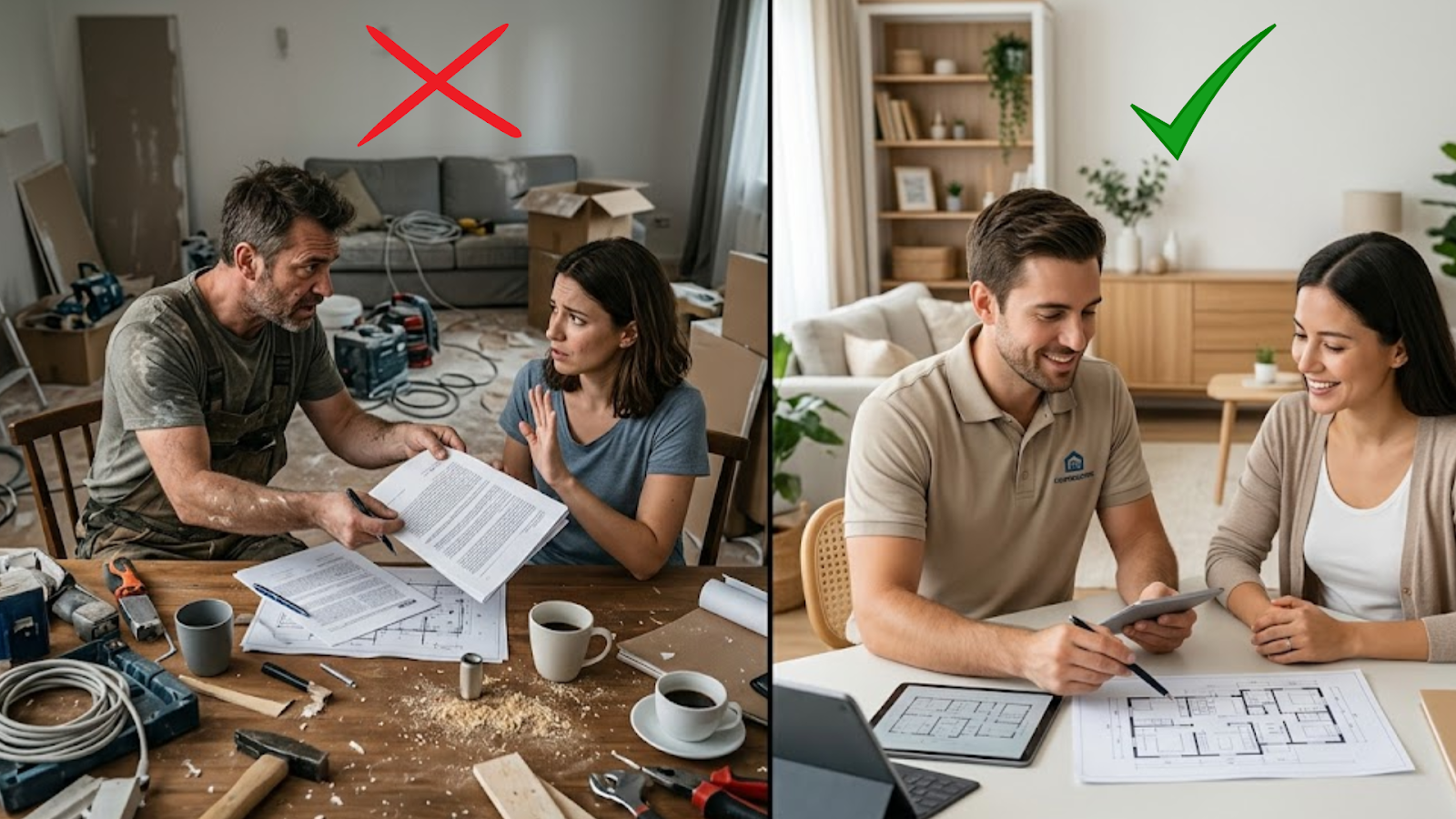
Knowing what makes a contractor trustworthy is important. But knowing when to walk away can save you from serious problems. Here are the most common red flags homeowners should watch for.
Here are the most common red flags homeowners encounter.
| Red Flag | The Real Risk | What to Do |
|---|---|---|
| Pressure to sign immediately | You end up locked into terms you have not had time to review | Always take at least 24 to 48 hours before signing anything |
| Unusually low bid | Often signals corner-cutting or a bait-and-switch on materials | Get 3 bids and question any outlier that seems too low to be realistic |
| Demands large cash upfront | Classic setup for a scam that is nearly impossible to recover from | Never pay more than 10% upfront in California, regardless of what you are told |
| No physical address or verifiable business | Very hard to track down if something goes wrong | Verify license, address, and online presence before agreeing to anything |
| Vague or verbal-only estimates | No accountability when costs suddenly go up mid-project | Everything needs to be in writing before work starts |
| Discourages permits | Creates unpermitted work that becomes your legal and financial problem | Walk away. There is no good reason to skip legally required permits |
| Frequent crew or subcontractor changes | Leads to inconsistency, quality issues, and delays | Ask about their core team and how they manage subcontractors upfront |
Real Examples Of Contractor Scams And Failed Projects
This is what’s actually happening to homeowners today. Most of these situations start with small red flags that seem easy to ignore at first.
In the Texas contractor fraud case of 2026, a contractor couple took millions from homeowners and left dozens of homes unfinished. Many families were stuck paying extra to fix or complete the work.
In Arlington construction scam alert 2025, local authorities warned residents about scammers posing as contractors, taking deposits, and disappearing without starting the job.
In a retirement savings renovation scam case, a homeowner lost their retirement savings after trusting a contractor who never completed the renovation.
These examples highlight a simple truth: missing early red flags can lead to serious financial loss and stress.
What To Do If You Are Scammed By A Contractor?
If you or someone you know has been scammed by a contractor, there are steps you can take. You can file a complaint and get guidance on what to do next through the Contractors State License Board (CSLB).
Learn how to report it and protect yourself here:
https://www.cslb.ca.gov/Resources/GuidesAndPublications/ConstructionComplaints_ENG0525_ADA.pdf
Taking action can help you recover and prevent the same thing from happening to others.
A Quick Example: How Small Mistakes Turn Into Big Problems
1. A homeowner gets three bids for a kitchen remodel. Two come in around the same range. The third is nearly half the price. Excited about the savings, the homeowner goes with the low bid. Work begins and stalls quickly. The contractor keeps asking for more money to cover materials. Months pass. The kitchen is still unfinished, and the contractor has stopped returning calls.
This is a classic bait-and-switch. The low bid gets the job. Then the costs creep up until the homeowner has paid more than the other bids anyway, for worse results.
2. Another common situation involves pressure to sign quickly. A contractor says a discount is only available today. You have not reviewed the contract carefully, but you do not want to miss out. You sign. Later, you discover the scope is vague, the timeline is not specified, and there is no clause covering what happens if the work is not completed.
Useful Tip:
Taking 24 to 48 hours to review any contract before signing costs you nothing. Rushing into one can cost you everything.
Questions To Ask A Contractor Before Hiring
Knowing the right questions to ask is one of the most practical tools you have as a homeowner. Here are the ones that matter most, organized by category.
About Credentials
Are you licensed and insured? Can I see proof of both?
Are you registered with the CSLB? Can I verify your license number?
How long have you been working in this area?
About the Project
Who will be on site daily? Are they your employees or subcontractors?
How do you handle unexpected costs or changes to the original scope?
Can you walk me through how you handle permits for a project like this?
About Process and Communication
What does a typical payment schedule look like for a project of this size?
How often will I receive updates on progress, and in what format?
What does your warranty cover and for how long?
Before You Call: Do This 2-Minute Website Check
A contractor’s website can tell you a lot, if you know what to look for. Spend a few minutes here before reaching out, especially if you want to avoid common contractor website mistakes that many homeowners overlook.
Good Signs:
- Real project photos with dates and locations
- Reviews on Google, Houzz, or Yelp (not just their own site)
- Clear contact details: address + phone number
- License and insurance information are mentioned openly
- Helpful content like blogs or FAQs
- Active social media with real work updates
Be Careful If You Notice:
- Only in-house testimonials, no third-party reviews
- Photos that look like stock images or lack details
- No license information anywhere
- No proper contact details
If their online presence feels incomplete or unclear, that’s usually a sign to pause and look at other options.
Step By Step: How To Choose A Contractor You Can Trust

Here is a simple checklist that pulls everything together. Work through these steps before you commit to anyone.
Define your project scope before reaching out to anyone. Know what you want before you start collecting bids.
Get at least three written bids from licensed, insured contractors.
Verify each contractor's license on the CSLB website at cslb.ca.gov.
Review their portfolio and contact at least two references from similar projects.
Read reviews across multiple platforms and look for consistent patterns, not one-off outliers.
Review the contract in full before signing and confirm all six elements from the table above are present.
Confirm that permits will be pulled and that inspections will be handled.
Agree on a milestone-based payment schedule in writing.
Establish a communication cadence upfront. Know how often you will get updates and how.
Confirm warranty terms before any work begins.
Final Takeaway
Hiring the right contractor does not have to be stressful. It comes down to a few key checks done before you sign anything.
Verify the license. Read the reviews. Get a written contract. Understand the payment schedule. Ask about permits. Test their communication before you commit.
Those steps take maybe an afternoon. Skipping them can cost you months of trouble and thousands of dollars.
If you are planning a home renovation in Santa Barbara and want a contractor who has already checked every one of these boxes, Kellow Construction is worth a conversation. We focus on quality craftsmanship and transparency, so homeowners feel confident at every stage of the project.
FAQs
Q: What should you not say to a contractor?Avoid saying “I don’t have a budget” or “just do whatever you think.” This gives too much control and can increase costs. Be clear about expectations, budget, and timeline so there’s less confusion and better accountability throughout the project.
Q: What is the average hourly cost for a contractor?The average hourly cost for a contractor in the U.S. usually ranges from $50 to $150 per hour. It depends on location, experience, and project type. Specialized work or high-end renovations can cost more than general handyman services.
Q: What is the 30% rule in remodeling?The 30% rule means you should not spend more than 30% of your home’s value on a single renovation. It helps you avoid over-improving your property and ensures you can still recover your investment if you decide to sell later.
Q: Does the 59-minute rule apply to contractors?The 59-minute rule doesn’t really apply to contractors. It’s more related to billing practices in some service industries. Most contractors charge based on project scope, milestones, or hourly rates—not small time blocks like 59 minutes.
Q: What not to tell your contractor?Don’t say “I trust you completely, no need for a contract.” Even good contractors need clear agreements. Avoid sharing vague instructions or changing decisions often. Clear communication and written details help prevent misunderstandings, delays, and unexpected costs.